

Nepenthes lowii × campanulata – The Bell-Tongued Beauty from Exotica Plants
[IMAGE: Young plant with developing pitchers – Credit: your nursery photo]
Nepenthes lowii × campanulata is one of those hybrids that makes collectors stop mid-scroll and take a closer look. Born in Australia at the legendary Exotica Plants, this cross fuses two icons: the flared, upturned peristome and “tongue” lid of lowii with the compact, bell-shaped form of campanulata. The result? A plant that’s both architectural and endearingly quirky – and a serious conversation starter in any collection.
The Parentage: A Match Made in Borneo
[IMAGE: Mature pitcher with deep flaring peristome – Credit: reference or Exotica Plants image if licensed]
Nepenthes lowii is a highland species from Borneo, famous for its hollow, toilet-bowl-shaped pitchers, flared peristome, and unique adaptation: a nectar-secreting “tongue” lid that lures tree shrews to feed (and fertilise). In contrast, Nepenthes campanulata is an ultra-lowland species, rare in the wild and instantly recognisable for its symmetrical, green-to-yellow bell-shaped pitchers that hug limestone cliff faces.
Crossing these two species creates a warm-intermediate hybrid that’s much easier to grow than either parent. It inherits lowii’s exotic lid and peristome detailing, paired with campanulata’s compact form and free-flowering nature – a dream for growers with limited space.
Growth Habit & Form
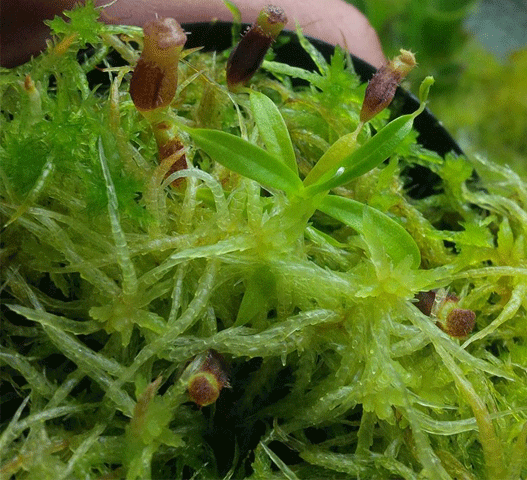
[IMAGE: Male inflorescence in bloom – Credit: your flower photo]
Expect a compact rosette in its early years, producing squat pitchers 6–10 cm tall with exaggerated flaring at the mouth. As it matures, it can develop short vines and produce both lower and upper pitchers, the latter becoming more elongated while retaining the signature peristome flare.
The leaf span of a well-grown specimen is more substantial — typically around 30–40 cm across — giving it an impressive presence even though it doesn’t really vine. Because of its size, an open paludarium or a large, airy growing space is ideal. And unlike some reluctant bloomers, this hybrid often flowers once mature, rewarding patient growers with inflorescences that hint at its Exotica Plants breeding history.
Colour & Personality
Pitchers often start a soft green, maturing to shades of gold, bronze, or even pinkish tones under high light. The peristome can darken and gain subtle striping, while the lid may curve forward in that classic lowii fashion.
“I have been looking for this one for a while. Therese packed this plant so nicely for cross-border travel — it arrived in excellent condition and it’s already making its first new pitchers!”
— Jason P. Namibia
Flowering & Sex
This particular specimen is a confirmed male, producing delicate clusters of small flowers on tall, elegant inflorescences. For hybridists, this opens the door to creating exciting second-generation crosses, potentially combining lowii’s peristome quirks with other showstopping Nepenthes traits. Even outside of breeding, the flowers are a rare treat, offering a glimpse into the plant’s full life cycle.
Growing Nepenthes lowii × campanulata in South Africa
This hybrid thrives in warm-intermediate conditions – meaning it can adapt to a bright indoor spot, north-facing windowsill, large terrarium, or sheltered outdoor grow area in summer. It’s far less fussy about night drops than pure lowii, and more forgiving of warmth than pure campanulata.
- Light: Bright filtered light to light shade. Too much shade = fewer pitchers. A few hours of soft morning sun can bring out colour.
- Temperature: Day: 22–28°C. Night: 15–20°C. Short spells outside this range are tolerated if humidity stays stable.
- Humidity: Prefers 60–80%, but can adapt to 50% indoors if acclimatised slowly.
- Water: Rain, RO, or distilled water. Keep the medium moist but airy; avoid waterlogging.
- Soil: Open, free-draining Nepenthes mix – e.g., sphagnum moss with orchid bark, perlite, and a touch of charcoal.
Why Collectors Love This Hybrid
Compact size. Ideal for limited-space growers.
Striking pitchers. Combines rare traits from two iconic species.
Ease of growth. Handles intermediate conditions without drama.
Provenance. Grown from stock bred by Exotica Plants, one of the most respected Nepenthes nurseries in the world.
Tips for Best Results
- Acclimate gradually to brighter light to deepen peristome colour.
- Feed with insects or dilute foliar feed monthly during active growth.
- Repot every 2–3 years to refresh medium and encourage root health.
- Support short vines with bamboo stakes to avoid breakage.
A Hybrid Worth the Bench Space
When you grow Nepenthes lowii × campanulata, you’re not just adding a plant – you’re adding a piece of modern Nepenthes breeding history. Its mix of architectural form, manageable size, and Exotica pedigree make it one of the most rewarding hybrids for both new and seasoned collectors.
Tags: nepenthes lowii x campanulata, exotica plants hybrid