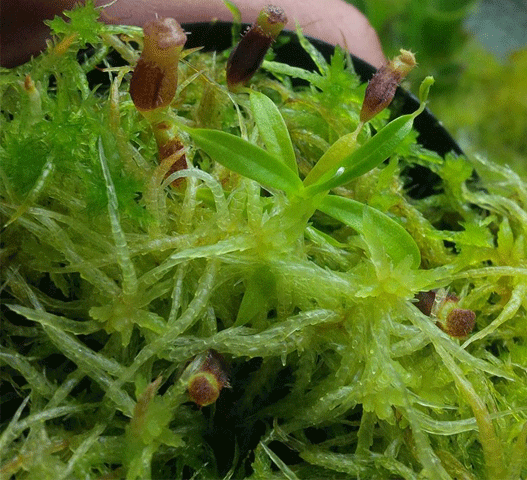


Utricularia sandersonii - The Angry Bunny Flower of South Africa

If you spend enough time around carnivorous plants, you’ll see teeth, jaws and alien pitchers that look like they came from another world. But every now and then, one comes along that makes you smile before you even realise you’re looking at a predator. Utricularia sandersonii is that plant.
Known affectionately as the Angry Bunny Flower, this tiny South African native is proof that carnivores don’t have to be menacing to be captivating. Its blooms - delicate, pale lavender with two upright “ears” - look like tiny rabbits caught mid-protest. Beneath this charming disguise lies one of nature’s most efficient hunters, quietly trapping microscopic prey in a hidden network of bladders below the soil.
A South African Original
FACT: Utricularia sandersonii calls home the cool, damp grasslands and rocky seeps of South Africa and Lesotho. Here, it weaves through mosses and shallow soils, its tiny leaves forming a creeping mat while its roots double as a hunting ground. In the wild, mist from nearby slopes keeps its habitat damp year-round, while summer storms bring bursts of growth and flowering.
FACT: Discovered in the late 1800s and named after explorer and botanist John Sanderson, this little Utricularia has since won over terrarium keepers, collectors, and casual growers alike. It’s tough enough for a beginner, beautiful enough for an orchid display, and so obliging with flowers that you may forget it’s a carnivore at all.
The Secret Hunter
Above the soil, it’s all charm — but underground is where the real work happens. Like other bladderworts, U. sandersonii has tiny vacuum traps along its thread-like roots. When a micro-crustacean or protozoan brushes against the trigger hairs, the trapdoor snaps open and sucks the prey inside in less than a blink.
FACT: These microscopic meals provide the nutrients the plant can’t find in its low-mineral habitat — the same reason it thrives in the same soil mixes as flytraps and sundews.
Growing the Angry Bunny at Home
The beauty of U. sandersonii is that it asks for very little and gives back a lot. Give it a bright spot out of harsh midday sun, keep its roots in pure water, and it will quickly settle in. In open pots, it forms a neat green mat dotted with flowers for much of the year. In a terrarium, it often takes on a more adventurous role — climbing moss, creeping over wood, even weaving between miniature orchids.
FACT: Water quality is the single most important factor. Rainwater, reverse-osmosis, or distilled water keeps its traps healthy and prevents mineral build-up. The soil should stay consistently moist, but not waterlogged to the point of stagnation. Many growers use a shallow tray of water in summer and scale back slightly in cooler months.
Terrarium Magic
FACT: While it will bloom happily in a simple pot, U. sandersonii really shines in high-humidity terrariums. The flowers appear taller, the colours richer, and the bloom count higher. This is why you’ll often see it used as a living carpet in planted displays alongside mosses, jewel orchids, or miniature Pleurothallids.
COMMUNITY INSIGHT: Growers with a creative streak arrange it so the flowers “peek out” from between stones or wood, as if a colony of tiny rabbits has taken up residence. It’s whimsical, easy, and always a conversation starter.
Flowering Habits
One of the joys of U. sandersonii is how long it blooms. In the right conditions, flowers can appear almost year-round, with peak displays in spring and summer. Each stem carries several buds, opening in sequence so the show lasts for weeks.
To keep it blooming, trim away spent flower stalks to encourage new ones, and avoid letting the pot dry out completely — even a brief drought can halt flowering for weeks.
Easy to Share, Hard to Resist
FACT: Unlike many carnivorous plants, U. sandersonii is a generous propagator. Once a small patch is established, it can be divided by simply lifting and separating a portion of the mat and replanting it in fresh soil. In fact, many collectors receive their first piece as a gift from another grower.
This willingness to spread makes it one of the most rewarding carnivorous plants you can buy — yet it’s still unique enough to delight even the most seasoned grower.
Why You’ll Love It
Utricularia sandersonii offers a rare combination: it’s native, beginner-friendly, ornamental, and just a little bit quirky. Whether you grow it for the flowers, the hidden carnivorous traps, or the sheer fun of pointing out the “angry bunnies” to visitors, it’s a plant that brings joy as easily as it brings blooms.
Ready to Add One to Your Collection?
Few carnivorous plants bring as much whimsy to a collection as the Angry Bunny Flower. Explore our Utricularia range and see if this South African charmer will hop into your home.